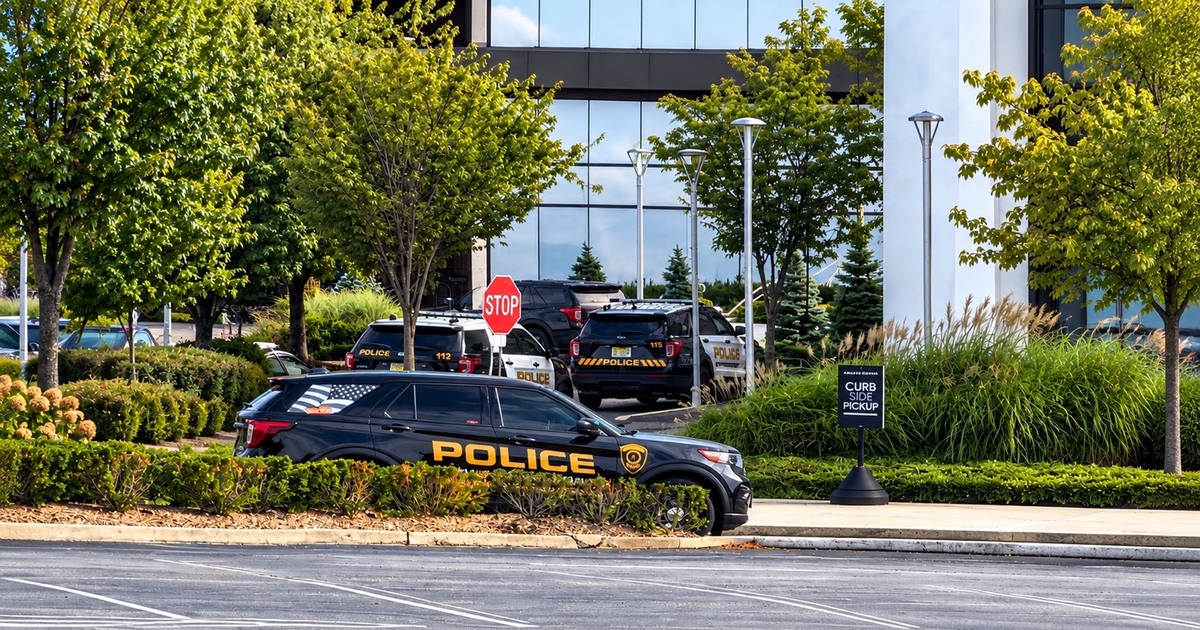
People were running out of The Shops at Riverside and into the parking lot.
Police vehicles blocked entrances around the Hackensack, New Jersey, shopping center. Officers carrying rifles could be seen responding as reports of a possible active shooter began circulating.
From outside the mall, the images looked like the opening minutes of a mass-casualty emergency.
But there was no shooter.
Hackensack Police ultimately determined that the sound shoppers believed might have been gunfire came from a jewelry display case being smashed during a theft inside Bloomingdale’s. Multiple people called 911 after hearing the noise, according to police accounts corroborated by local reporting.
No gunshots had been fired.
The distinction became clear only after police had responded to what, at the time, had to be treated as a potentially much more dangerous incident.
That makes what happened Tuesday more than a straightforward smash-and-grab story. It is also an example of how quickly an ambiguous sound, frightened shoppers, emergency calls, a major police response and incomplete information can transform a real crime into reports of something far worse.
It started with reports of possible gunfire
The first information reaching police was alarming.
Multiple 911 callers at The Shops at Riverside reported hearing what they believed could be gunshots Tuesday, September 22.
Hackensack police responded to the mall, with the Bergen County Sheriff’s Department, a regional SWAT team and other area police agencies also responding, according to Patch’s reporting based on police statements.
Video recorded from outside the shopping center showed people running into the parking lot away from the building. Other footage showed officers responding around the property.
Those images mattered because, for people watching in real time, they appeared to reinforce the initial reports.
People were fleeing.
Police were arriving in force.
Access around the mall was being restricted.
And reports describing an active-shooter situation began spreading before authorities had established what actually happened.
None of those observations proved there was a shooter.
But during the earliest stage of the response, police did not yet have the information necessary to dismiss that possibility either.
What police found inside Bloomingdale’s
The explanation investigators eventually developed was dramatically different.
According to Hackensack Police, a suspect entered Bloomingdale’s and smashed a jewelry display case before stealing jewelry.
The sound of the display breaking apparently prompted multiple shoppers to believe they had heard gunfire and call 911.
Police determined that no shots had been fired.
Patch separately reported that the suspect had left the mall and remained at large as of about 1 p.m., while police said there were no injuries resulting from the theft.
Video from inside Bloomingdale’s later showed a damaged jewelry display, providing a view of the physical aftermath of the theft.
The precise value of the stolen merchandise had not been publicly established in the reporting available to TrendPulse at the time of publication.
The available information also does not establish that the suspect deliberately attempted to create the impression of gunfire.
What police have established is narrower: a jewelry display was smashed during a theft, the resulting noise generated reports of possible shots, and the police response followed.
That sequence explains why two apparently contradictory versions of the incident circulated within such a short period.
There really was a crime occurring inside the mall.
There really were frightened shoppers running outside.
There really was a substantial police and SWAT response.
But the initial explanation—that someone was firing a gun inside the shopping center—was wrong.
Why police responded as if the threat could be real
Once callers report possible gunfire inside a crowded shopping center, police cannot safely begin with the assumption that the sound was harmless.
They have to establish that.
That helps explain why the response seen in videos appeared far more serious than the crime eventually identified by investigators.
The Shops at Riverside is not a small retail strip.
The shopping center at 390 Hackensack Avenue is a major Bergen County retail destination anchored by Bloomingdale’s. Simon Property Group describes it as a luxury shopping, dining and entertainment destination minutes from Manhattan. Its tenants include Tiffany & Co., Louis Vuitton, David Yurman, Ferragamo and other high-end retailers.
Bloomingdale’s itself occupies two levels on the north side of the mall.
A report of gunfire in a large indoor shopping destination therefore presents police with an immediate problem: officers arriving outside do not yet know whether they are responding to a mistaken sound, an isolated crime involving a weapon or an attacker who remains inside among shoppers.
That uncertainty also helps explain why a regional SWAT team and multiple surrounding agencies were brought into the response. Patch reported that the Bergen County Sheriff’s Department, regional SWAT team and other local police departments responded alongside Hackensack officers.
The final answer can only come after officers secure the scene and investigate.
On Tuesday, that answer was considerably less dangerous than the initial calls suggested.
The videos were real. The initial explanation wasn’t.
The incident also demonstrates a recurring problem with following breaking events through social media.
Video can establish something important without establishing everything.
Footage showing people running from Riverside Square Mall is genuine evidence that shoppers were fleeing.
It does not establish why they were fleeing.
Video of armed officers around the property demonstrates the seriousness of the police response.
It does not establish that police had located an armed suspect.
And a person hearing what sounds like gunfire can accurately describe what they heard while still being mistaken about what produced the sound.
That difference becomes especially important during the first minutes of a public-safety incident.
A dramatic video often reaches social media before investigators have had time to determine what it shows.
Once a description such as “active shooter” becomes attached to that footage, subsequent viewers can interpret everything they see through that assumption: people running becomes evidence of a shooter; officers carrying rifles becomes evidence of a shooter; blocked entrances becomes evidence of a shooter.
But each of those things is also consistent with police responding cautiously to an unconfirmed report of one.
That is what happened at Riverside.
Why shattered glass could produce such a response
The fact that police eventually found no gunfire does not mean the people who called 911 necessarily acted irrationally.
A sudden, extremely loud impact inside an enclosed commercial space can be difficult to identify—particularly for someone who does not see its source.
The context matters too.
Shoppers hearing a violent crashing sound do not have the benefit of the investigation that comes afterward.
They have seconds to decide whether the noise represents danger.
Once some people begin moving rapidly away from an area, others may follow without knowing precisely what happened. Police then arrive based on the information available to emergency dispatchers.
That can produce a powerful feedback loop.
A loud unexplained sound creates fear.
Fear produces emergency calls and people fleeing.
The emergency calls produce a large police response.
The visible police response makes the initial threat appear increasingly credible to people watching from outside.
Only the investigation can break that cycle by determining what actually happened.
In Hackensack, investigators eventually traced the sound back to the broken jewelry display.
A smash-and-grab at a major luxury mall
The location also helps explain why the incident attracted immediate attention.
The Shops at Riverside markets itself as one of the region’s luxury shopping destinations. In addition to Bloomingdale’s, its current directory includes high-end jewelry and fashion retailers such as Tiffany & Co., David Yurman, Louis Vuitton, Ferragamo and Rolex at Lee Perla.
That does not make Tuesday’s theft representative of crime at the mall generally.
But it provides context for why a jewelry theft inside Bloomingdale’s—and the much more alarming emergency response it inadvertently triggered—became a significant local story.
The event unfolded at a recognizable shopping destination in one of the country’s most densely populated metropolitan areas, with videos of shoppers fleeing and armed officers responding circulating before police had publicly established what caused the commotion.
For anyone encountering those videos without the eventual police explanation, the scene could look considerably worse than what investigators ultimately found.
What is known about the suspect?
This is where the evidence remains more limited.
Police have established that a suspect entered Bloomingdale’s, smashed a jewelry display and stole merchandise.
Patch reported that the suspect had fled and was still at large as of about 1 p.m. Tuesday. Police said the incident remained under investigation.
At the time of publication, TrendPulse had not independently verified a public estimate of the value of the jewelry taken or a complete account of the suspect’s movements before and after the theft.
Those details should not be filled in from social-media speculation.
The same applies to claims about additional suspects, getaway vehicles or motives beyond the apparent theft unless police release further information.
The central factual finding does not depend on those unanswered questions.
The crime police say actually occurred was a jewelry smash-and-grab.
The active-shooter scare was the unintended emergency that followed it.
What the Riverside scare actually shows
Breaking news often becomes clearer by adding information.
This story became clearer by removing something that initially appeared to be there.
There were no gunshots.
There was no active shooter identified by police.
What authorities found was a smashed jewelry display inside Bloomingdale’s and a theft that produced a sound alarming enough for multiple people to call 911 believing they may have heard gunfire.
By early afternoon, police said the mall had resumed normal operations and there was “no cause for public alarm at this time,” according to Patch.
That finding does not make the initial response meaningless or the fear experienced by shoppers imaginary.
Quite the opposite.
The videos of people running into the parking lot were real.
The armed police and SWAT response was real.
The crime inside Bloomingdale’s was real.
The uncertainty confronting shoppers and officers during the first minutes was real.
What changed was the explanation connecting those facts.
That is why the Riverside Square Mall incident is a useful example of the difference between documenting a developing emergency and knowing what caused it.
During the first stage, authorities had reports of possible gunfire and had to respond accordingly.
After investigating, they had something very different: a jewelry smash-and-grab whose shattered display case had sounded enough like gunfire to briefly make a luxury shopping mall look like the scene of an active-shooter emergency.
The dramatic first images told part of the story.
The investigation supplied the part that mattered most.
Sources
- Hackensack Police Department — September 22, 2026 statement
Primary police account of the response to reports of possible gunfire and the subsequent determination that a jewelry display had been smashed during a theft at Bloomingdale’s and no shots had been fired. - Daily Voice — “Smash-And-Grab Sparks Gunshot Scare At Riverside Square Mall In Hackensack”
Independent local reporting corroborating the police account that multiple callers reported possible gunfire before officers determined that the noise came from a jewelry display being smashed during a theft. - Patch — “SWAT Team Responds To Mall In Bergen County After Shoppers Report Gunshots: Cops,” September 22, 2026
Reporting that the Bergen County Sheriff’s Department, a regional SWAT team and other area police agencies responded; that the suspect remained at large as of about 1 p.m.; and that police said the mall had resumed normal operations with no ongoing public threat. - Photo of police at The Shops at Riverside
Publicly shared image showing the police response outside the mall during the developing incident. - Video from The Shops at Riverside
Publicly shared video showing the mall area and people outside during the developing incident. - Ryan J. Cobb — on-scene account and witness interviews
Publicly shared on-scene reporting describing the developing situation and conversations with people who said they witnessed events at the mall. Used as supplementary firsthand context, not as the primary authority for police findings. - Simon Property Group — The Shops at Riverside
Official information about the Hackensack mall, its Bloomingdale’s anchor, location and luxury retail mix.
This article was prepared with AI assistance and reviewed and approved by TrendPulse Analytics before publication.